
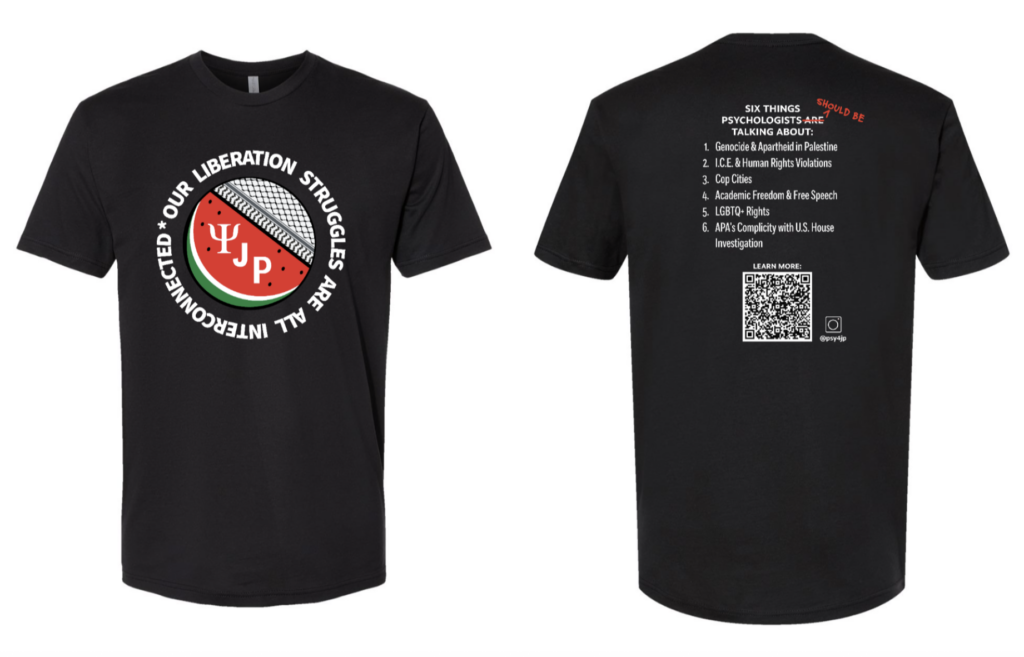
1. Genocide and Apartheid in Palestine
In 2025, an independent investigation conducted by the UN Independent International Commission of Inquiry on the Occupied Palestinian Territory officially concluded that Israel has committed genocide in Gaza (United Nations Human Rights Council, 2025). The scope of the atrocities and Israel’s continued violation of the ceasefire agreement has led Genocide Watch to describe the crisis as being in Stage 8 (Persecution) and Stage 9 (Extermination) of the stages of genocide (Carlton et al., 2026).
Although much media coverage in recent years has focused on Israel’s actions since October 2023, the violation of Palestinian rights and occupation of Palestine have been a decades-long atrocity. Since the ethnic cleansing of approximately 750,000 Palestinians in 1948 during the Nakba (Arabic for “catastrophe”), Israel has exerted control over Palestinians’ land and lives. In 2022, Amnesty International published a 280-page report documenting Israel’s apartheid against Palestinians, guided by the Apartheid Convention, the Rome Statute, and international law (Amnesty International, 2022). Israel systematically oppresses the Palestinian people through administrative and legal institutions of discrimination and control, including (but not limited to) systems of segregation, land dispossession, denial of equal nationality and status, restricting freedom of movement, restrictions to political participation, and control of economic and public resources. The intentionality and impact of this decades-long system have led many to call Israel’s oppression of Palestinians a slow-motion genocide (Lendman, 2010).
The implications for psychologists span individual and systemic levels. Anti-Palestinian racism; anti-Arab, Middle Eastern, and North African (AMENA) bias; and anti-Muslim bias negatively affect psychological and physiological well-being (e.g., Salsa, 2025), and are driving factors in systemic discrimination (e.g., educational settings; Saleh et al., 2026). Anti-Palestinian racism affects both Palestinians and non-Palestinians; bearing witness to atrocities such as the genocide in Gaza can cause moral injury (Schwalbe, 2023). As a professional community, APA’s emphasis on the public interest commits us to “foster the advancement of human rights, fairness, and dignity for all segments of society” (APA, 2021). In our daily work and our professional actions, we have both a responsibility and an opportunity to oppose the human rights violations in Palestine.
There is a direct connection between the decades-long genocide and apartheid in Palestine and our goals as psychological healers. When we advocate for a free Palestine, we advocate for a more just world for all.
References:
American Psychological Association. (2021, November). About public interest. https://www.apa.org/pi/
Amnesty International. (2022). Israel’s apartheid against Palestinians: Cruel system of domination and crime against humanity. https://www.amnesty.org/en/documents/mde15/5141/2022/en/
Carlton, A., Monopoli, L., & Bonde, K. (2026, April). Special report: Ceasefire violations in Gaza. Genocide Watch. https://www.genocidewatch.com/single-post/special-report-ceasefire-violations-in-gaza
Lendman, S. (2010). Israel’s slow-motion genocide in occupied Palestine. Cook, W.A. (ed.), The plight of the Palestinians. Palgrave Macmillan. https://doi.org/10.1057/9780230107922_2
Saleh, M., Saberi, F., & Awwad, N. (2026). “You’re good as long as you’re silent”: Anti-Palestinian racism in schooling. Critical Education, 17(1), 155–178. https://ices.library.ubc.ca/index.php/criticaled/article/view/187083/185796
Salsa, H. E. Y. (2025). The impact of anti-Arab racism in social media on the mental health and daily lives of Arab Americans (2016-2025) (Doctoral dissertation, Al-Quds University). https://dspace.alquds.edu/server/api/core/bitstreams/774fd9a5-c479-43ef-8188-06acbdfcde35/content
Schwalbe, M. (2023, December 29). The moral injuries of witnessing genocide. CounterPunch. https://www.counterpunch.org/2023/12/29/the-moral-injuries-of-witnessing-genocide/
United Nations Human Rights Council. (2025, September 16). Legal analysis of the conduct of Israel in Gaza pursuant to the Convention on the Prevention and Punishment of the Crime of Genocide. United Nations. https://www.ohchr.org/sites/default/files/documents/hrbodies/hrcouncil/sessions-regular/session60/advance-version/a-hrc-60-crp-3.pdf
2. I.C.E. and Human Rights Violations
The United States Immigration and Customs Enforcement (ICE) was developed under the Department of Homeland Security in 2003 following 9/11 using “national security” as a justification for government-sanctioned torture, surveillance without warrant, and indefinite detention (Porotsky, 2021). ICE is founded on histories of institutionalized racism and xenophobia in the U.S., tracing its roots back to discriminatory immigration laws, such as the Chinese Exclusion Act of 1882 and the Immigration and Nationality Act (Patler & Jones, 2025; Porotsky, 2021). Since its inception, ICE has disproportionately targeted racially and ethnically minoritized populations—particularly Latiné, Black, and Southwest Asian and North African (SWANA) communities—through racial profiling and mass surveillance tactics (Eidy et al., 2020). Recent escalations in state-sanctioned violence perpetrated by ICE under the Trump administration have resulted in the use of deadly force, intimidation tactics, and retaliatory actions against civilians (Bell & Shah, 2026). ICE detention centers are operating in grave violation of international human rights law, with civilians reporting uninhabitable/unsanitary conditions and medical neglect, leading to the tragic deaths of 52 people in ICE custody between January 20, 2025, and June 4, 2026 (Williams, 2026). Detention, particularly for children, has longstanding developmental and psychological effects (see first person children accounts: Hear My Voice/Escucha mi voz: The Testimonies of Children Detained at the Southern Border of the United States). The violent threat of ICE has had deleterious impacts on the material, physical, psychological, and emotional well-being not only for individuals, but also for immigrant communities (Hacker et al., 2011; Martinez-Aranda, 2026). Nonimmigrants are also affected through disruptions to daily life, concerns about interactions with ICE officers and civil liberties, and indirect social and economic impacts when community members are detained, deported, or separated from their families (Bernstein et al., 2026). Psychologists have an ethical imperative to advocate against ICE to protect public well-being.
Opposition to ICE is directly connected to the fight for Palestinian liberation. Tactics utilized by ICE have been informed by decades of collaboration between the U.S. and Israeli military and policing institutions. The Anti-Defamation League (ADL) has facilitated exchanges between ICE and the Israeli national police and military through the National Counter-Terrorism Seminar (NCTS) and the Advanced Training School (Researching the American–Israeli Alliance & Jewish Voice for Peace, 2018). These exchanges have contributed to practices and technologies used by ICE to enact institutionalized racial profiling, deportation and detention, and mass surveillance.
There is a direct connection between the violence of ICE and the ongoing genocide in Palestine. When we advocate for a free Palestine, we advocate for a safer world for all.
To learn more about the connection between ICE exchange programs and Palestine, see this report developed by the Researching the American–Israeli Alliance in partnership with Jewish Voice for Peace: https://deadlyexchange.org/wp-content/uploads/2019/07/Deadly-Exchange-Report.pdf.
References:
Bell, D. C., & Shah, N. (2026, July 16). Agents of chaos and cruelty: How the Trump administration’s national deportation policing force has attacked American communities. American Civil Liberties Union. https://www.aclu.org/publications/agents-of-chaos-and-cruelty-how-the-trump-administrations-national-deportation-policing-force-has-attacked-american-communities
Bernstein, H., Gonzalez, D., & Guelespe, D. (2026). Immigration enforcement affected both immigrant and nonimmigrant families across the US in 2025: Findings from the Well-being and Basic Needs Survey. Urban Institute. https://www.urban.org/sites/default/files/2026-04/Immigration%20Enforcement%20Affected%20Both%20Immigrant%20and%20Nonimmigrant%20Families%20Across%20the%20US%20in%202025_331.pdf
Eidy, N.-H., Alvarez, R., & Simone, M. (2020). State sanctioned violence across Latinx, Black, and Arab and Muslim communities in a post-9/11 America. The Macksey Journal, 1, Article 194. https://mackseyjournal.scholasticahq.com/article/21855.pdf
Hacker, K., Chu, J., Leung, C., Marra, R., Pirie, A., Brahimi, M., English, M., Beckmann, J., Acevedo-Garcia, D., & Marlin, R. P. (2011). The impact of Immigration and Customs Enforcement on immigrant health: Perceptions of immigrants in Everett, Massachusetts, USA. Social Science & Medicine, 73(4), 586–594. https://doi.org/10.1016/j.socscimed.2011.06.007
Martinez-Aranda, M. G. (2026). The impact of Immigration and Customs Enforcement’s surveillance technology on the well-being of the children of immigrants. American Behavioral Scientist, 70(3), 280–298. https://doi.org/10.1177/00027642231216538
Patler, C., & Jones, B. (2025). The US deportation system: History, impacts, and new empirical research. RSF: The Russell Sage Foundation Journal of the Social Sciences, 11(4), 1–24. https://doi.org/10.7758/RSF.2025.11.4.01
Porotsky, S. (2021). Rotten to the core: Racism, xenophobia, and the border and immigration agencies. Georgetown Immigration Law Journal, 36, 349–358. https://papers.ssrn.com/sol3/Delivery.cfm?abstractid=4032901
Researching the American–Israeli Alliance & Jewish Voice for Peace (2018, September). Deadly exchange: The dangerous consequences of American law enforcement trainings in Israel. https://deadlyexchange.org/wp-content/uploads/2019/07/Deadly-Exchange-Report.pdf
Williams, R. (2026). Dying in detention. Human Rights Watch. https://www.hrw.org/report/2026/06/25/dying-in-detention/rising-deaths-in-an-expanding-us-immigration-detention-system
3. Cop Cities
Cop Cities are large-scale militarized police training facilities that have spread throughout the U.S. in recent years. Following the 2020 uprisings against police brutality, the Atlanta Police Foundation sponsored development of the largest-ever law enforcement training facility in the U.S. (Akbar, 2023). As of 2025 these facilities have spread to 49 of 50 U.S. states and range from 3 to 146 acres, with total costs over $3.25 billion since 2020 (isyourlifebetter, n. d.). Resistance to Cop Cities is situated at the intersection of police violence, climate justice, and environmental racism (Love & Donoghoe, 2023). In addition to furthering the growth of police militarization and carceral violence in the U.S., these facilities inflict ecological damage through deforestation and pollution via toxic waste, generally in predominantly Black communities (Versey, 2023). Police violence—including the disproportionate killing of Black people and the arrest, detention, and deportation of immigrants—is rooted in a long history of state-sanctioned violence aimed at maintaining systems of oppression and violence, preserving a social and political order that privileges dominant groups (DeVylder et al., 2020). The psychological effects of these systemic harms are profound; environmental racism negatively affects mental health throughout the lifespan (Romana & Oltime, 2023), and police violence is a uniquely traumatizing risk factor for mental health problems relative to other forms of violence (DeVylder et al., 2020). As psychologists, Cop Cities and their effects are directly relevant to our role in advancing public well-being.
These U.S. facilities are directly connected to issues of Palestinian liberation and decades of collaboration between the U.S. and Israeli militaries. Police exchange programs such as the Georgia International Law Enforcement Exchange (GILEE) bring U.S. police trainees to occupied Palestine for the explicit purpose of learning tactics and strategies from the Israeli Occupation Forces (James, 2023). We see these techniques in the U.S. through systems of mass surveillance, racial profiling programs, and force-based suppression tactics (Researching the American–Israeli Alliance & Jewish Voice for Peace, 2018). In short, “[w]ithin these programs, worst practices are shared to promote and extend discriminatory and repressive policing practices that already exist in both countries…US forces take whatever is working in Israel and they bring it here and inflict it on Black and Brown people” (Rania Salem, US Palestinian Community Network, as quoted in Valenzula, 2025).
There is a direct connection between the violence of U.S. Cop Cities and the ongoing genocide in Palestine. When we advocate for a free Palestine, we advocate for a safer world for all.
To learn more about the connection between police exchange programs and Palestine, see this report developed by the Researching the American–Israeli Alliance in partnership with Jewish Voice for Peace: https://deadlyexchange.org/wp-content/uploads/2019/07/Deadly-Exchange-Report.pdf
And further resources on resisting Cop Cities are available in a syllabus developed by Writers Against the War on Gaza: https://wawog.medium.com/stop-cop-city-from-atlanta-to-palestine-a-syllabus-56b1614ed13a
References:
Akbar, A. A. (2023, Spring). The fight against Cop City. Dissent Magazine. https://dissentmagazine.org/article/the-fight-against-cop-city/
DeVylder, J., Fedina, L., & Link, B. (2020). Impact of police violence on mental health: A theoretical framework. American Journal of Public Health, 110(11), 1704–1710. https://doi.org/10.2105/ajph.2020.305874
Is Your Life Better. (n. d.). Cop Cities, USA. Is Your Life Better. https://isyourlifebetter.net/cop-cities-usa/
James, J. (2023, November 14). Atlanta Stop Cop City activists continue push to abolish GILEE program amid the Palestinian genocide. Prism. https://prismreports.org/2023/11/14/stop-cop-city-gilee-palestinian-genocide/
Love, H., & Donoghoe, M. (2023, September 21). Atlanta’s ‘Cop City’ and the relationship between place, policing, and climate. Brookings. https://www.brookings.edu/articles/atlantas-cop-city-and-the-relationship-between-place-policing-and-climate/
Researching the American–Israeli Alliance & Jewish Voice for Peace (2018, September). Deadly exchange: The dangerous consequences of American law enforcement trainings in Israel. https://deadlyexchange.org/wp-content/uploads/2019/07/Deadly-Exchange-Report.pdf
Romana, V. B.-S., & Oltime, N. (2023, April 3). The impact of environmental racism on mental health of minority people in North America. Seneca College [final research project]. https://digitalrepository.senecapolytechnic.ca/files/original/002e111fa96bdec3e3b77a20be007eb492192057.pdf
Valenzula, V. (2025, January 7). ‘Deadly Exchange’: US sends hundreds of law enforcement to Israel to learn ‘worst practices’ from IDF. The Real News. https://therealnews.com/deadly-exchange-us-sends-hundreds-of-law-enforcement-to-israel-to-learn-worst-practices-from-idf
Versey, H. S. (2023). Housing, environmental justice, and the case of the Stop Cop City movement: A structural intersectional approach to housing equity. Environmental Justice, 16(6), 403–409. https://doi.org/10.1089/env.2022.0035m
4. Academic Freedom and Free Speech
We are living in a moment of intensifying academic suppression, including restrictions on teaching about accurate history, race, gender, and LGBTQIA+ experiences. Scholarship about Palestine faces particularly extreme censorship and institutional silencing, and student activists have experienced systemic policing, including arrests, expulsions, and revocation of degrees. These examples reflect a longstanding history of the “Palestine exception to free speech” (Lynn, 2026) which has been supported by the International Holocaust Remembrance Alliance (IHRA) definition of antisemitism. The IHRA definition has been critiqued by scholars of antisemitism and human rights organizations for conflating antisemitism with criticism of the state of Israel (Bangstad, 2025) and is being used to condemn and repress any speech that is critical of Israel’s ongoing genocide in Palestine and in support of Palestinian human rights (Bangstad, 2025). In 2024, Palestine Legal (Palestine Legal, 2025) received reports of over 2,000 incidents of targeting via university investigations, doxxing, adverse employment decisions, termination, criminal investigations, harassment, and threats of physical violence. The Canary Mission and Betar U.S. have utilized surveillance tracking to doxx pro-Palestinian students and faculty, contributing to the state-sanctioned abduction and detainment of Mahmoud Khalil and Rümeysa Öztürk by ICE, as well as the revocation of at least 300 student visas to suppress pro-Palestine speech (Monahan, 2026).
The American Association of University Professors (AAUP) and Middle East Studies Association (2025) reported that the Trump administration invoked Title VI through conflating criticism of the state of Israel with antisemitism, enabling federal investigations of universities and threats of substantial funding cuts. This unprecedented suppression of campus speech through reinterpretation and weaponization of Title VI (AAUP & Middle East Studies Association, 2025) has also been expanded to undermine and dismantle diversity, equity, and inclusion (DEI) initiatives, further threatening academic freedom and First Amendment protections. Psychologists have an ethical imperative to defend academic freedom and freedom of speech in support of Palestinian liberation and DEI broadly. Prohibiting speech that promotes accurate facts, historical realities, and empirical findings is antithetical to the foundations of psychology.
There is a direct connection between attacks on academic freedom and free speech, and the ongoing genocide in Palestine. When we advocate for a free Palestine, we advocate for a liberated world for all.
To learn more about the connection between academic freedom, free speech, and Palestine, see this report by the American Association of University Professors and the Middle East Studies Association (2025): https://www.aaup.org/sites/default/files/2025-11/Discriminating-Against-Dissent_0.pdf
References:
American Association of University Professors & Middle East Studies Association. (2025). Discriminating against dissent: The weaponization of civil rights law to repress campus speech on Palestine. https://www.aaup.org/sites/default/files/2025-11/Discriminating-Against-Dissent_0.pdf
Bangstad, S. (2025). The Palestine exception to academic freedom and the IHRA definition of antisemitism. The Journal of Imperial and Commonwealth History, 53(3), 689–700. https://doi.org/10.1080/03086534.2025.2494669
Lynn, R. (2026). The Palestine exception: Academic freedom and the logic of occupation in US higher education. Middle East Critique, 1–17. https://doi.org/10.1080/19436149.2026.2665502
Monahan, T. (2026). Censorship and surveillance at US universities. Middle East Report, 318. https://www.jstor.org/stable/48868865
Palestine Legal. (2025). A new generation for liberation: Historic student protests defy university crackdowns [2024 year in review report]. https://static1.squarespace.com/static/548748b1e4b083fc03ebf70e/t/67fe79259066a5210ae06fad/1744730460662/Palestine+Legal+2024+Year+in+Review+Reportmm
5. LGBTQIA+ Rights
LGBTQIA+ people in the United States have faced an unprecedented rollback of legal protections and increased attacks that undermine their civil rights, well-being, and dignity. In 2026 alone, state legislatures introduced more than 500 anti-LGBTQIA+ bills, targeting healthcare, education, and free speech and expression (American Civil Liberties Union, 2026). In June 2025, the U.S. Supreme Court’s ruling in United States v. Skrmetti upheld state bans on gender-affirming care for minors, and such bans are now in effect in at least 26 states (KFF, 2025; Movement Advancement Project, 2026). That same year, a federal court vacated portions of the Equal Employment Opportunity Commission guidance protecting LGBTQIA+ workers from harassment based on gender identity and/or sexual orientation, narrowing protections established after the 2020 Bostock v. Clayton County decision (Littler, 2025). Meanwhile, book bans targeting LGBTQIA+ narratives and authors have surged to nearly 6,900 instances in a single school year, with the federal government now actively fueling censorship campaigns (PEN America, 2025).
The erosion of LGBTQIA+ rights in the U.S. is connected to Palestinian liberation. Israel has long practiced “pinkwashing”—promoting its LGBTQIA+ rights record to international audiences while using that image to deflect scrutiny about, and lend legitimacy to, its occupation of Palestine and ongoing genocide of Palestinians (el-Amoor, 2024; Shafie, 2015). The rainbow flag has been used as propaganda by the Israeli military in Gaza to suggest that Israel is furthering LGBTQIA+ rights by destroying Gaza and killing Palestinians. Anti-Muslim bias is used as a weapon to say that Palestinian liberation is at odds with LGBTQIA+ rights, which erases the realities of LGBTQIA+ Palestinians. In fact, Israeli intelligence services have a history of targeting LGBTQIA+ Palestinians in order to force them to become informants (Graham-Harrison, 2024). This strategy is a type of criminal coercion that instrumentalizes queer lives in service of state violence, the same violence increasingly directed at LGBTQIA+ people here at home.
There is a direct connection between the rollback of LGBTQIA+ rights and the ongoing genocide in Palestine: both depend on state power to dehumanize and decide whose identities, families, and bodies deserve protection and dignity. When we advocate for a free Palestine, we advocate for a safer world for all.
To learn more about LGBTQIA+ rights, pinkwashing and Palestinian solidarity, see the Al-Qaws for Sexual & Gender Diversity in Palestinian Society resources: https://www.alqaws.org
References:
ACLU. (2026). Mapping attacks on LGBTQ rights in U.S. state legislatures in 2026. American Civil Liberties Union. https://www.aclu.org/legislative-attacks-on-lgbtq-rights-2026
el-Amoor, I. (2024). Queering genocide: Israel’s pinkwashing campaign and the ineptness of international law in Gaza. SQS – Suomen Queer-tutkimuksen Seuran Lehti, 18(3), 1–20. https://journal.fi/sqs/article/view/154750
KFF. (2025, June 20). What are the implications of the Skrmetti ruling for minors’ access to gender-affirming care? https://www.kff.org/lgbtq/what-are-the-implications-of-the-skrmetti-ruling-for-minors-access-to-gender-affirming-care/
Graham-Harrison, E. (2024, June 16). ‘No pride in occupation’: queer Palestinians on ‘pink-washing’ in Gaza conflict. The Guardian. https://www.theguardian.com/world/article/2024/jun/16/queer-palestinians-lgbtq-israel-pride-flags-gaza-conflict-pink-washing
Lee, W. Y., Hobbs, J. N., Hobaica, S., DeChants, J. P., Price, M. N., & Nath, R. (2024). State-level anti-transgender laws increase past-year suicide attempts among transgender and non-binary young people in the USA. Nature Human Behaviour. https://doi.org/10.1038/s41562-024-01979-5
Littler. (2025, May 21). Federal court vacates EEOC harassment guidance regarding LGBTQ individuals. https://www.littler.com/news-analysis/asap/federal-court-vacates-eeoc-harassment-guidance-regarding-lgbtq-individuals
Movement Advancement Project. (2026). Bans on best practice medical care for transgender youth. https://mapresearch.org/equality-map/bans-on-best-practice-medical-care-for-transgender-youth/
PEN America. (2025). The normalization of book banning. https://pen.org/report/the-normalization-of-book-banning/
Shafie, G. (2015). Pinkwashing: Israel’s international strategy and internal agenda. Kohl: A Journal for Body and Gender Research, 1(1), 82–86. https://doi.org/10.36583/kohl/1-1-11
6. APA’s Complicity with U.S. House Investigation
Through its Ethics Code (2017) and the “Resolution on APA, Psychology, and Human Rights” (2021), the American Psychological Association (APA) has explicitly and formally committed itself to uphold, defend and advance human rights and oppose prejudice and discrimination in all its forms and against all people, in accordance with international law. Further, in February 2026, APA’s Council of Representatives adopted both a Resolution on Antisemitism (APA, 2026a) and a Statement on Reaffirming APA’s Commitment to Human Rights and Freedom of Expression (APA, 2026b), warning against the “weaponization” of antisemitism claims to silence legitimate criticism, scholarship, or activism concerning Israel’s conduct. Still, in practice, APA has failed to live up to its pledge and commitments it has to its members, the field of psychology, and society at large.
Currently, APA is under two federal investigations that rest on the conflation of antisemitism with anti-Zionism, and its active compliance with these investigations has put its members at risk.
Since December 2025, APA has been cooperating with the House Committee on Education and Workforce investigation opened under the banner of combating antisemitism. In this investigation, APA turned over member and listserv communications, publications, and programming materials referring to Israel and Palestine since October 2023 (U.S. House Committee on Education and Workforce, 2025). APA has released these communications without notification to affected members, open transparency (without strings attached) about the contents of release to affected divisions, and without redaction, despite the fact that there was no subpoena. This proactive compliance exposes members who criticize Israeli policy or support Palestinian rights to potential legal, professional and personal consequences. These actions are a result of antisemitism and anti-Zionism being treated as interchangeable, which goes against APA’s own policies.
In June 2026, the U.S. Department of Health and Human Services Office for Civil Rights opened a parallel Title VI investigation, following a Brandeis Center complaint, that likewise treats criticisms of Zionism as a colonial ideology as antisemitic discrimination (Louis D. Brandeis Center for Human Rights Under Law, 2026). APA has not communicated to members or Division leaders about their response to this investigation. Both investigations rely on criticisms of Zionism and Israel’s actions—and not on the prejudice toward Jews as Jews—as their central evidence of antisemitism.
There is a direct connection between APA’s complicity with the U.S. House Committee and the ongoing genocide in Palestine. When we advocate for a free Palestine, we advocate for a safer world for all.
To learn more about the risks of APA’s complicity with the two ongoing House Committee investigations, see this report conducted by Palestine Legal: https://palestinelegal.org/news/2025/4/15/trumps-supercharged-attacks-on-student-activism-for-palestine-follows-50-increase-in-suppression-last-year
Further resources about the dangers of conflating antisemitism with anti-Zionism are available here: https://www.hrw.org/news/2023/04/04/human-rights-and-other-civil-society-groups-urge-united-nations-respect-human
References
American Association of University Professors. (2023). Legislative threats to academic freedom: Redefinitions of antisemitism and racism. https://www.aaup.org/reports-publications/aaup-policies-reports/policy-statements/legislative-threats-academic-freedom
American Psychological Association. (2017). Ethical principles of psychologists and code of conduct. https://www.apa.org/ethics/code
American Psychological Association. (2021). Resolution on APA, psychology, and human rights. https://www.apa.org/about/policy/resolution-psychology-human-rights.pdf
American Psychological Association. (2026a). Resolution on antisemitism. https://www.apa.org/about/policy/resolution-antisemitism-2026.pdf
American Psychological Association. (2026b). Statement on reaffirming APA’s commitment to human rights and freedom of expression. https://www.apa.org/about/policy/statement-human-rights-freedom-expression
Louis D. Brandeis Center for Human Rights Under Law. (2026, June). Federal civil rights investigation opened into American Psychological Association over alleged anti-Semitic discrimination. https://brandeiscenter.com/federal-civil-rights-investigation-opened-into-american-psychological-association-over-alleged-anti-semitic-discrimination/
U.S. House Committee on Education and Workforce. (2025, December 12). Letter to Debra Kawahara, President, American Psychological Association. https://edworkforce.house.gov/uploadedfiles/apa_letter_12.10.2025.pdf